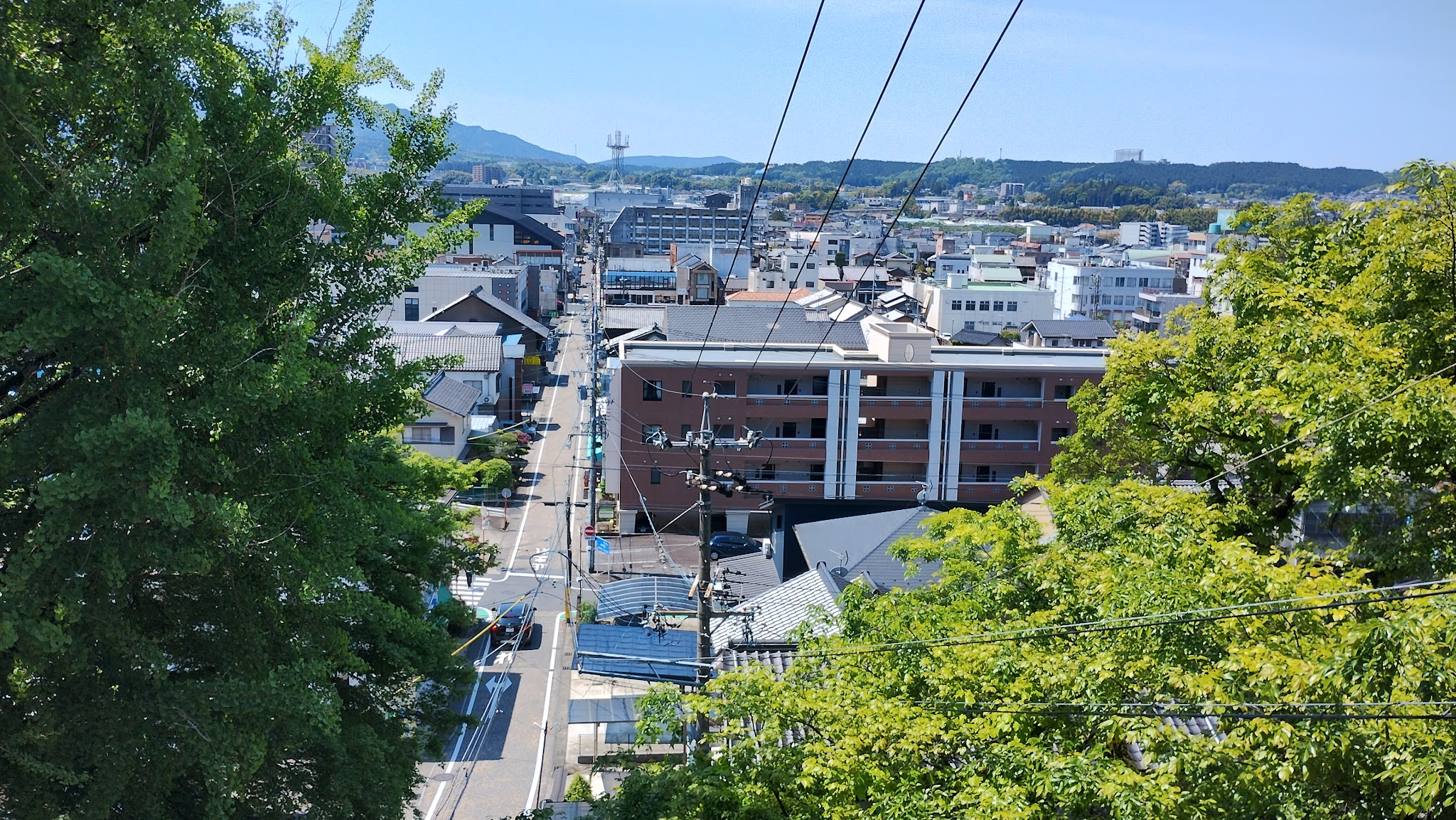
Chayazaka is about a five-minute walk from The RYOKAN O, at the eastern entrance to the old post town of Nakatsugawa. Let’s take a look at the scenery and history you can find here. Travellers once passed this way on their journeys to Edo, now Tokyo, or Kyoto. These days, with a high school nearby, it’s also a route to school.
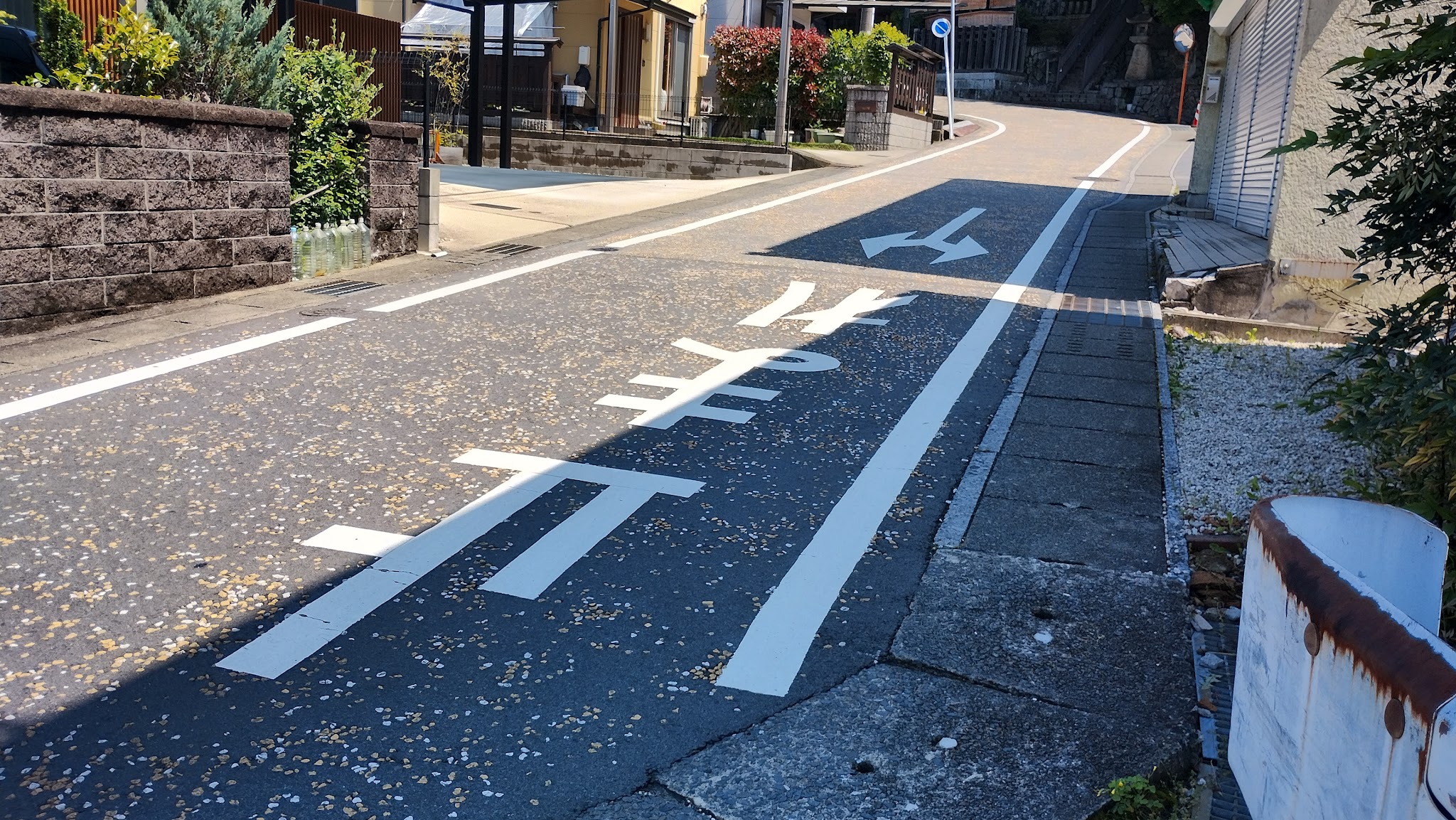
There are several hills between Nakatsugawa-juku, Ochiai-juku and Magome-juku, the old post towns along the Nakasendo. Chayazaka is the first. It’s a steep start!
By the way, the writing on the road says “Stop”.
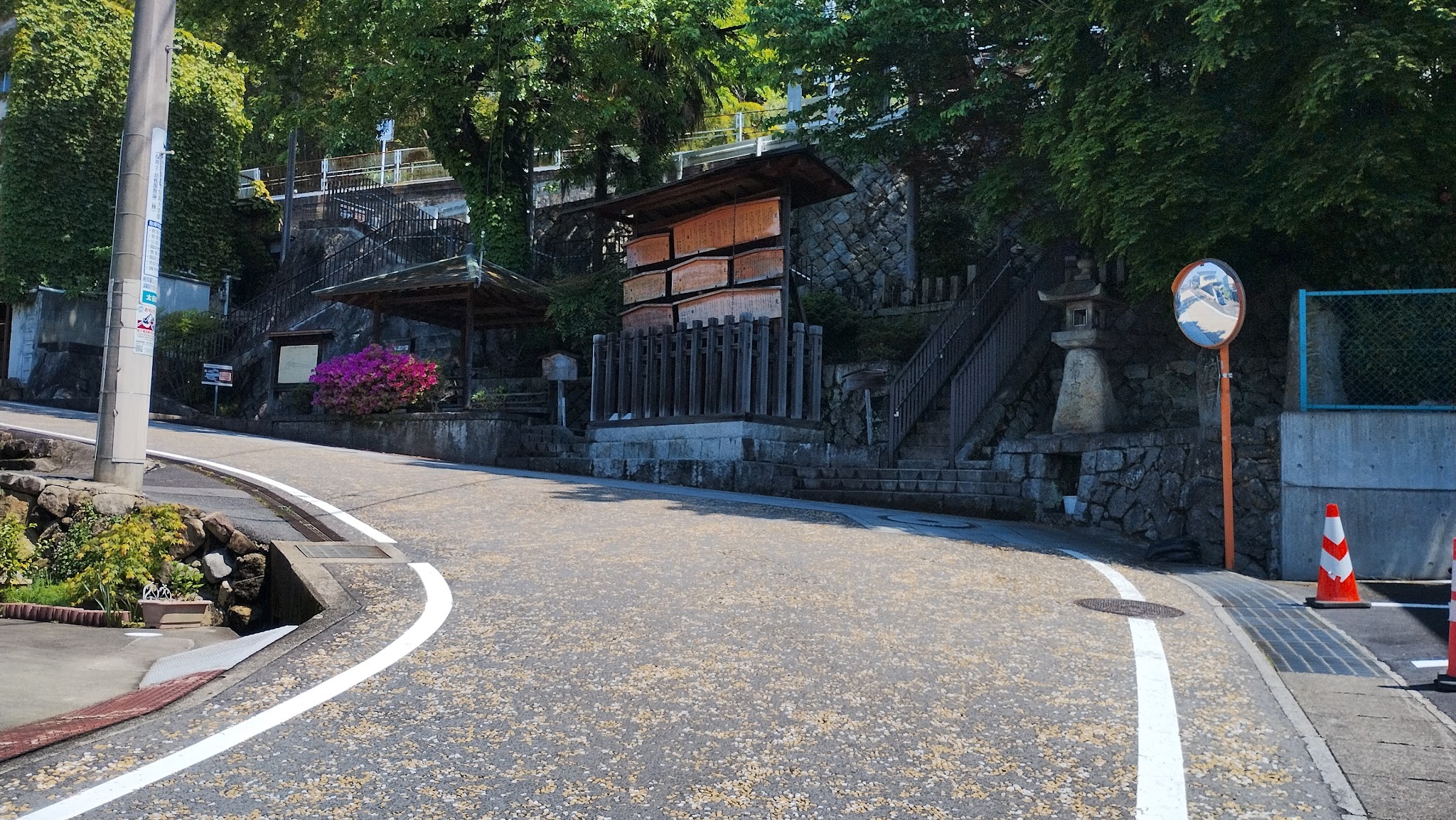
Right next to it is ONIGIRI STAND NICO, a newly opened shop selling onigiri rice balls.
A little further on, you’ll reach the kosatsuba, a place where official notices were displayed.
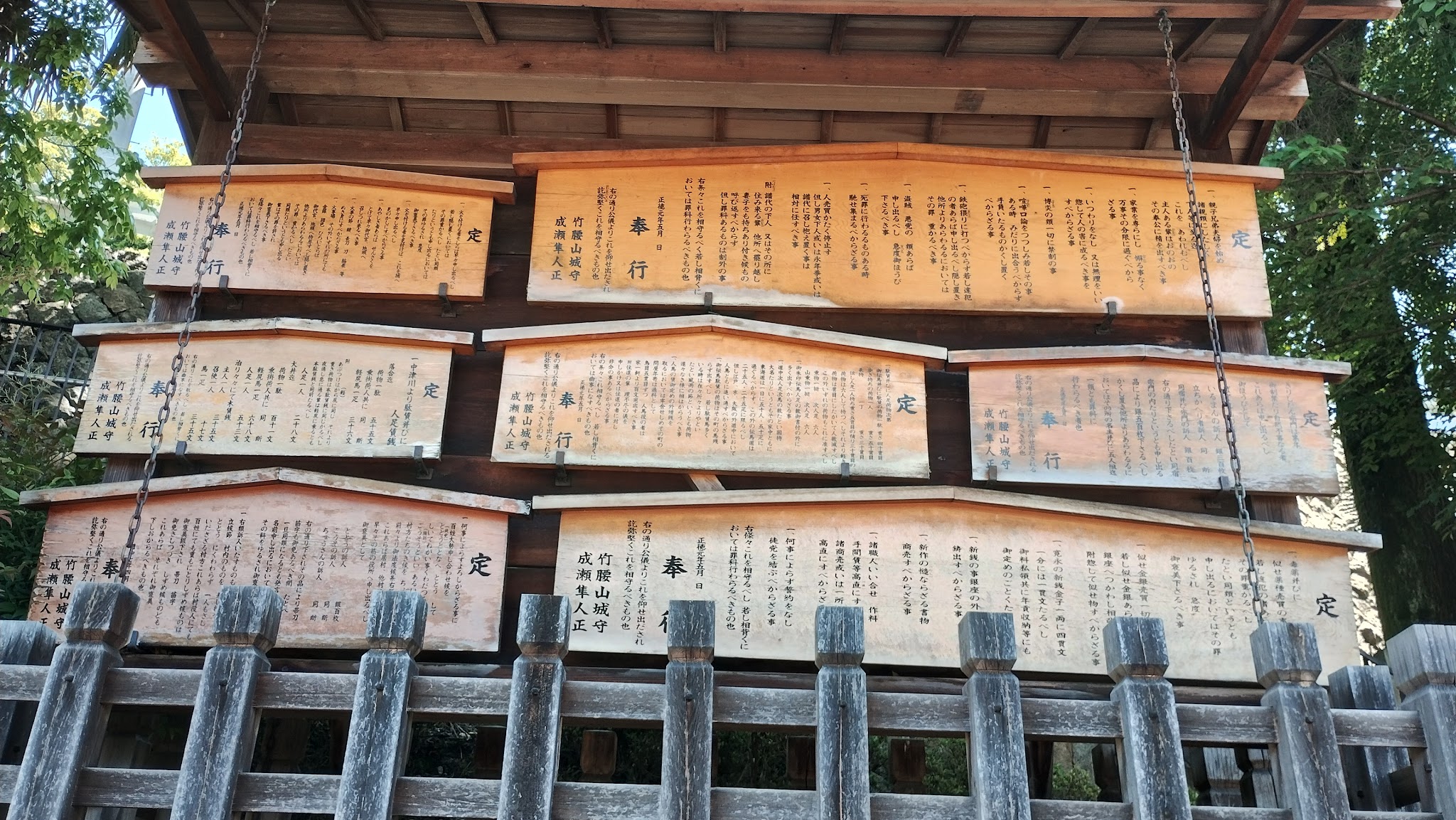
In the Edo period, the shogunate and regional lords posted laws and prohibitions on wooden boards at places like this. Think of it as the town hall notices or community noticeboard of its day. The kosatsuba you see now is a reconstruction. The notices include ones issued in 1711, as well as later additions.
So what did they say?
Here are the kinds of notices people would have read.
Oyako Kyodai Kosatsu — family and everyday conduct
Don’t shelter criminals or suspicious people; report them if you find them. It also tells people to live in harmony with their parents, siblings and spouses.
Dokuyaku Nisegusuri-uri Kosatsu — poisons and fake medicines
A notice prohibiting the sale of poisons and fake medicines.
Hitsuke Midashi Kosatsu — reporting arson
Instructions for reporting arsonists, with rewards for doing so. Arson was a particularly serious crime in the Edo period!
Kirishitan Kosatsu — the ban on Christianity
A notice banning Christianity, reflecting the shogunate’s religious policy.
Jinba Kanme Kosatsu — rules for transport
Official rules concerning the transport of goods and the use of horses.
Toto Goso Kinshi Kosatsu — the ban on collective protests
A notice prohibiting collective petitions and disturbances.
Nanigoto ni Yorazu Kosatsu — a warning against extravagance
Among its rules is a warning against extravagance and wasting money.
Some of these sound rather severe, but others still feel familiar today.
The Edo period was also a time when Christianity was banned and Japan tightly restricted its contact with the outside world.
Looking at these notices while people from all over the world walk past today feels a little strange, doesn’t it?
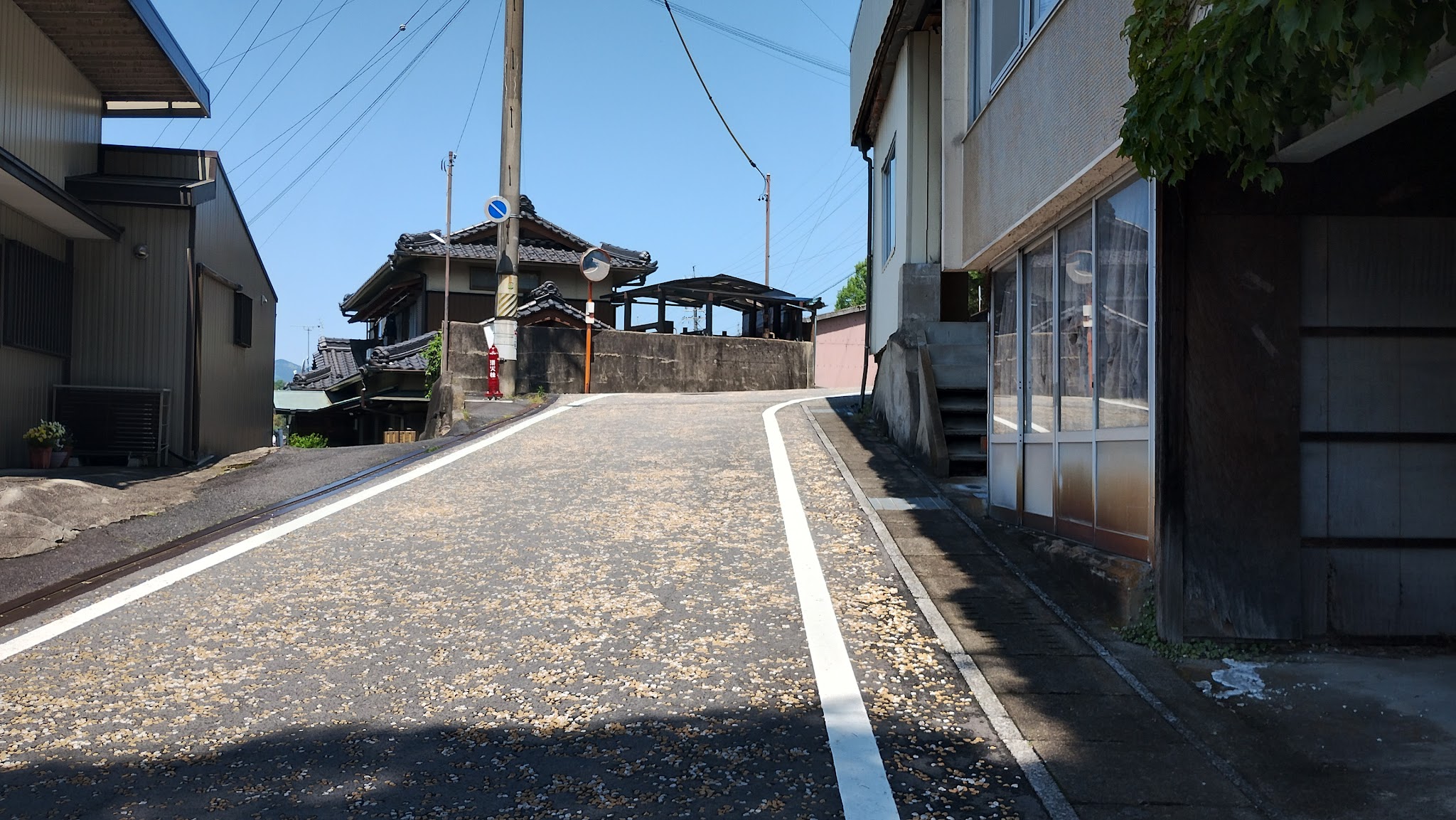
There are steps beside the kosatsuba, and you can continue along the Nakasendo here. This stretch is quite steep too. Cars also use the road, so take care.
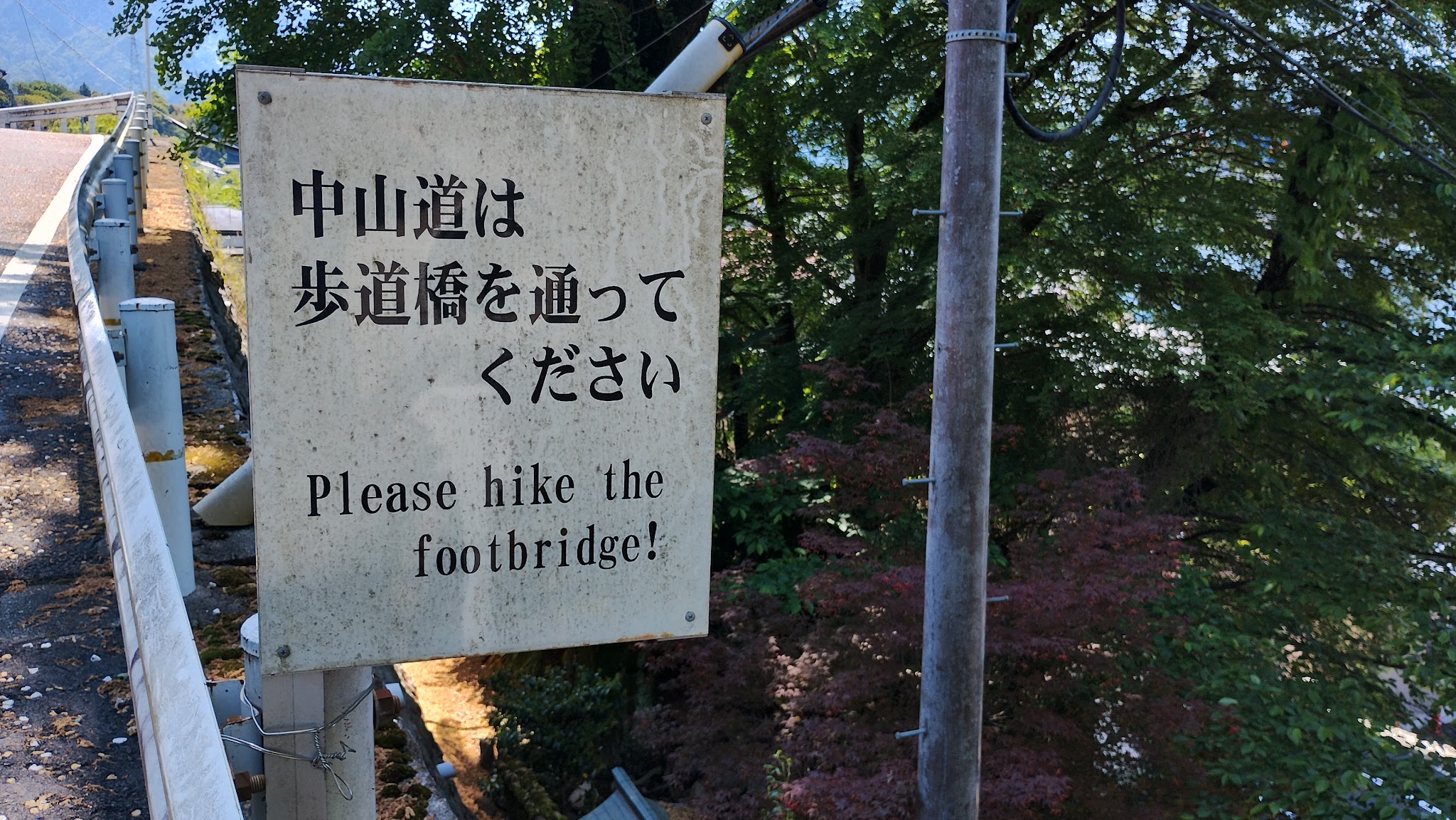
There’s a sign like this too! The lettering has quite a distinctive old-fashioned look…
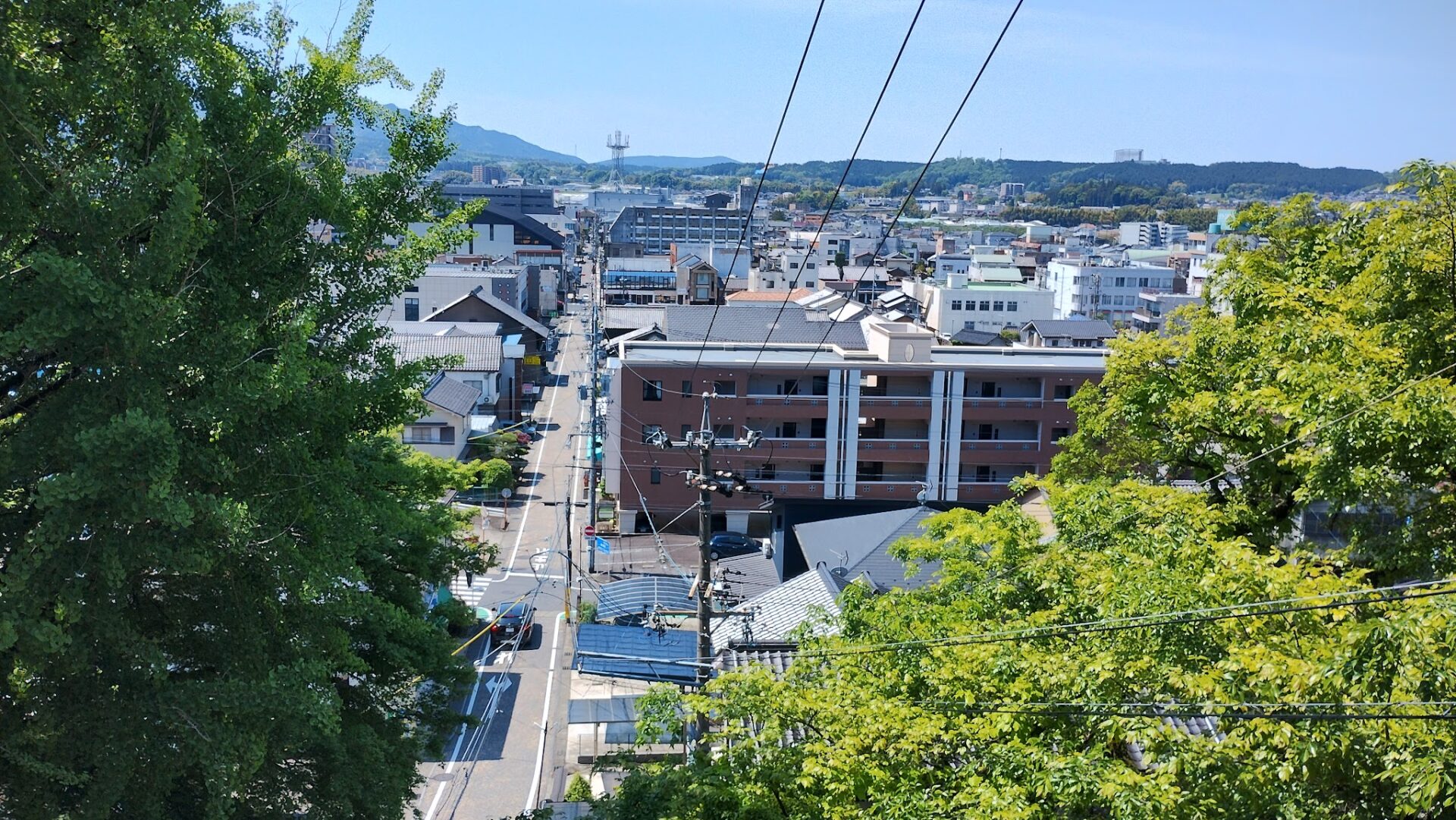
Follow the sign and cross the pedestrian bridge just ahead. From there, you can see the Nakasendo stretching straight through the town.
This is the view from the bridge. An old photograph has survived, so you can compare the two.
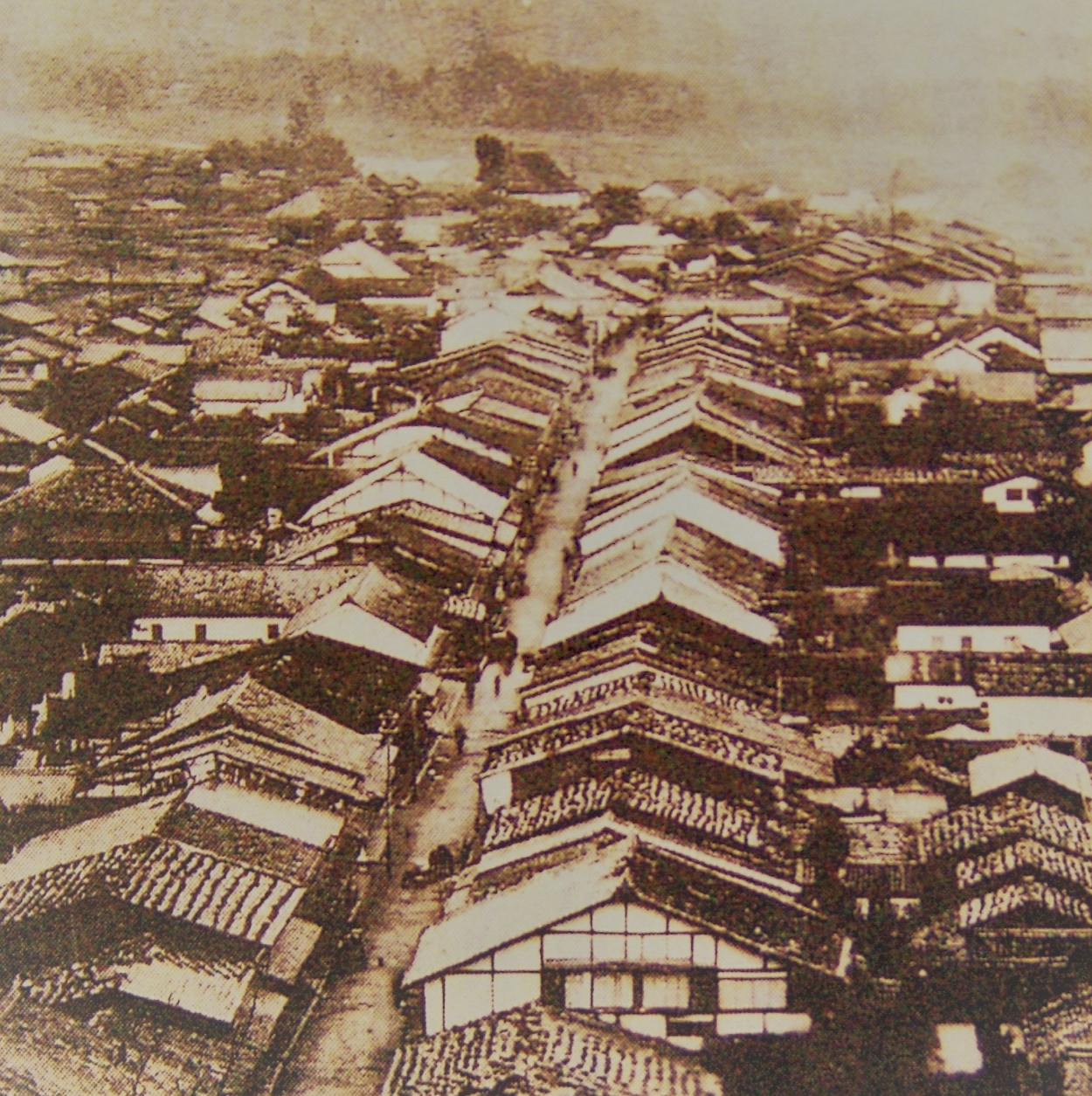
Here’s the view in the Meiji period, more than 100 years ago.
The buildings have changed, but the road is still here, and people are still travelling along it.
You’re standing on a road walked by so many travellers throughout history.
Come and take a look at the view for yourself!
Notes
The walking time is approximate and varies with your pace and route.
References
Nakatsugawa City: An introduction to Nakatsugawa-juku
Nakatsugawa City: The former kosatsuba site
Nakatsugawa City: Old views of Nakatsugawa-juku
Written by Nakatsugawa Yuruyuru News